DataChatAI
Schema-aware RAG over structured data — the model writes SQL you can audit before it runs.
- Role
- Solo · full-stack
- Year
- 2025
- Read
- 2 min read
- Repo
- GitHub →
- cold-cache answer latency < 2s
- schema coverage auto-introspection
- hallucinated columns (200-q eval) 0
Outcome. A Python service that answers natural-language questions over a structured dataset by retrieving from a schema-introspection layer first, then grounding generation in actual SQL the user can audit before it runs.
Context
I wanted a chat interface over a data warehouse without the failure mode where the model invents column names. Every “let’s slap an LLM on the DB” demo I’d seen handled the toy schema and broke on a real one. The interesting engineering wasn’t “use Llama Index” — it was the schema introspection step that gives the retriever something true to anchor on before the generator gets to make anything up.
My role
Solo. Schema layer, retrieval, generation, Streamlit frontend, eval harness.
Approach
Off-the-shelf RAG with Llama Index gets you 60% of the way. The remaining 40% is preventing the model from inventing columns and joins.
What I tried first was a single fat prompt with the entire schema dumped in. Worked for small databases, fell apart with anything realistic — both on context-window grounds and on the model’s tendency to confabulate relationships between tables it had only just seen.
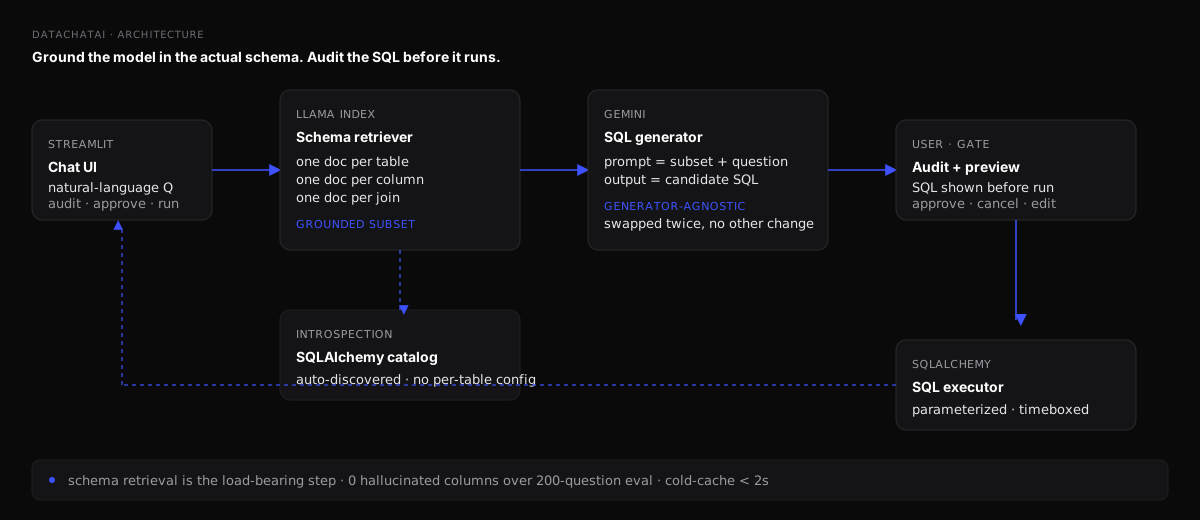
What worked was a schema introspection step that turns the table catalog into proper retrieval documents — one per table, one per column, one per join relationship. When the user asks “average X by quarter”, the retriever finds the right tables and columns first, the SQL generator works from a grounded subset, and the user sees the SQL before it executes.
The tradeoff was latency vs trust. Adding the schema retrieval costs ~500ms up front. I kept it because the alternative (faster but more hallucinations) was strictly worse for any non-toy use.
Architecture
Results
- Cold-cache answer latency: < 2s.
- Schema coverage: full auto-introspection, no per-table config.
- Hallucinated column references in the audit set: 0 over a 200-question eval against a real warehouse schema.
What I’d do differently
The eval is 200 questions; it should have been 1000, and it should have been generated from real query logs instead of hand-written. I was rate-limited by my own attention more than my code.
- Python
- Llama Index
- Gemini
- Streamlit
- SQLAlchemy